What "Contract Grade" Actually Means For Hotel Seating
- Share
- publisher
- karam Spaces
- Issue Time
- Nov 2,2026
Summary
Contract grade hotel furniture means tested performance—frame cycles, seat load, foam, abrasion, stability—not hotel seating claims.
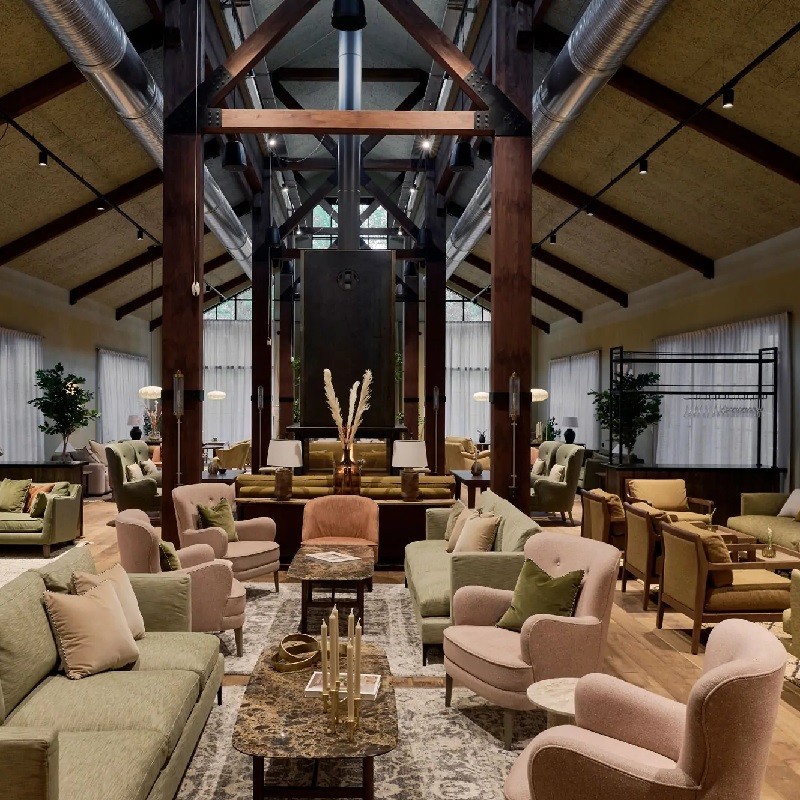
“Contract grade” should describe a test, not a mood. When a supplier uses the term, the useful next question is not “how contract-grade is it?” but “what was it tested against — frame cycle testing, seat load, foam compression, abrasion on the cover, and stability?” Residential-grade seating placed in a hotel lobby does not wear out gradually. It fails at the joint, usually within the first heavy season, while the cover still looks acceptable to everyone walking past.
For luxury hotel and resort operators, that gap between appearance and structural reality is not a minor procurement detail. It is a guest-facing risk, a brand-reputation risk, and a capital-expenditure problem that surfaces long after the furniture was signed off.
The Term Has No Single Legal Definition — Treat It as a Question, Not an Answer
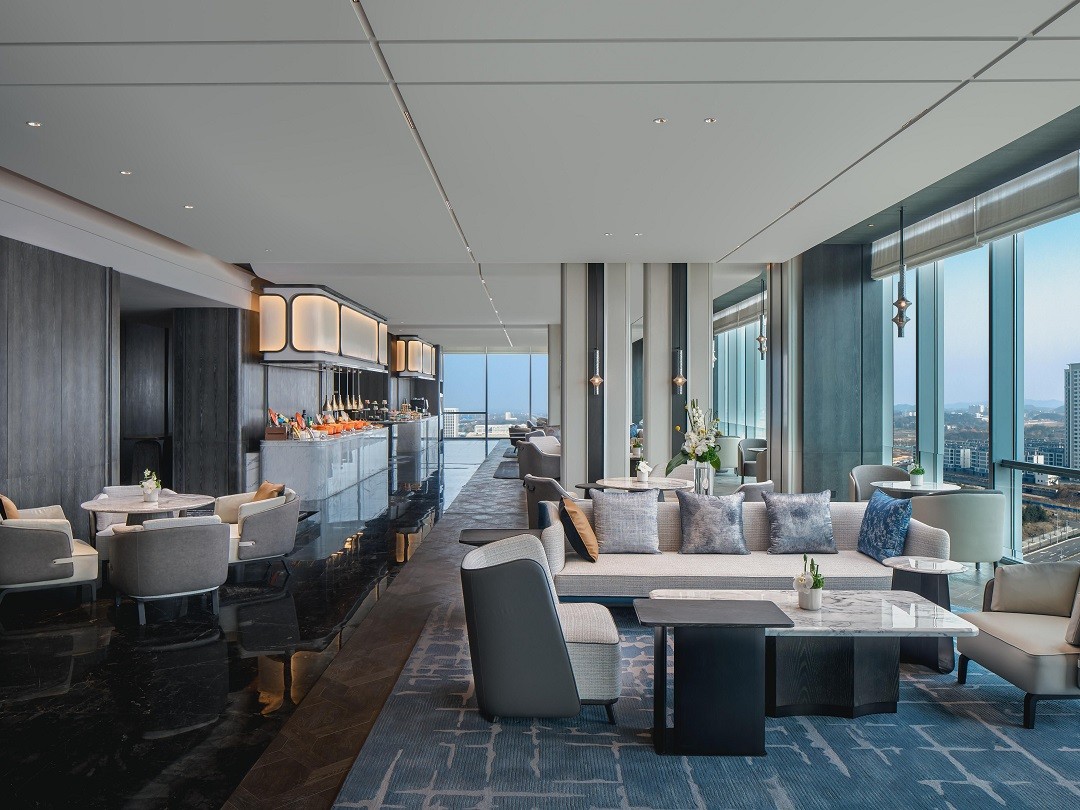
In most markets, “contract grade” carries no binding legal definition. It is used to describe everything from genuinely tested commercial seating to domestic pieces photographed in a more flattering light. That ambiguity is precisely why a professional hotel seating manufacturer should welcome the question rather than avoid it: the tests are what separate a specification from a sales adjective.
For procurement teams at five-star properties, the practical response is to replace the phrase with the tests you want and the standard each is tested against. Two lines of specificity give you something to check on delivery rather than something to argue about later — and they make the difference between a chair that survives a lobby season and one that exposes a joinery problem at the worst possible moment.
The Five Tests That Separate Commercial Hotel Seating from Domestic Furniture
Frame Cycle Testing
The question is not whether the structure survives initial loading, but whether it survives repeated loading over tens of thousands of cycles. Contract-grade frames are commonly evaluated against cyclic seat and back loading in the range of 100,000 cycles, with pass criteria that include joint gap tolerance and structural integrity. This single test separates commercial seating from domestic seating faster than any other because it exposes the connection points that day-one comfort cannot reveal.
Seat Load Rating
A rating for occasional use is not enough for a hotel lobby where guests sit continuously, bags are placed on seats, and housekeeping moves furniture daily. The specification should state the load and whether it is rated for continuous commercial duty. For lobby and public-area seating, the rating needs to reflect the reality of near-constant occupancy rather than an occasional-guest assumption.
Foam Compression
Here the data is unambiguous. Residential foam at 25–28 kg/m³ may feel comfortable in a showroom, but commercial hotel seating requires high-resilience foam at a minimum of 40 kg/m³ for seat cushions, with premium properties often specifying 40–45 kg/m³. Day-one comfort hides season-one loss: compression loss is gradual and invisible until the cushion has flattened and the cover has loosened.
Abrasion on the Cover
In a hotel lobby, surface wear is dominated by clothing, bags, and cleaning regimes, not by sitting alone. Heavy-traffic lobby upholstery should be specified at 80,000 Martindale cycles or higher, while commercial guest-room and restaurant upholstery typically requires 40,000 cycles as a minimum. Abrasion performance does not equal stain resistance, and neither establishes flame performance — each needs its own verified result.
Stability
This matters particularly for outdoor and banquet pieces. Uneven poolside surfaces, stacking, trolley movement, and seasonal rearrangements change the stability picture entirely. A stable chair in a showroom is not necessarily a stable chair after two hundred stack-and-move cycles in a resort banquet operation.
Why Hotel Seating Fails at the Joint, Not the Surface
When residential-grade seating enters a hotel lobby, the cover usually looks acceptable for a long time. What fails is the joint — the glue line, the fixing, the connection between leg and frame — because it was never designed for continuous commercial loading. The visible surface absorbs the compliments; the hidden connection absorbs the stress.
This is why turning a chair over tells you more than sitting in it. The joint method is visible: reinforced corner blocks, dowel-and-glue construction versus dowel-only joints, and the moisture content of the timber before assembly. A frame built with unseasoned wood above 12% moisture can warp, squeak, or degrade during ocean freight, long before it reaches the lobby floor. The test result is not visible from the outside, but the construction method is — and a hotel seating solution that cannot show its joint logic is a specification waiting to fail.
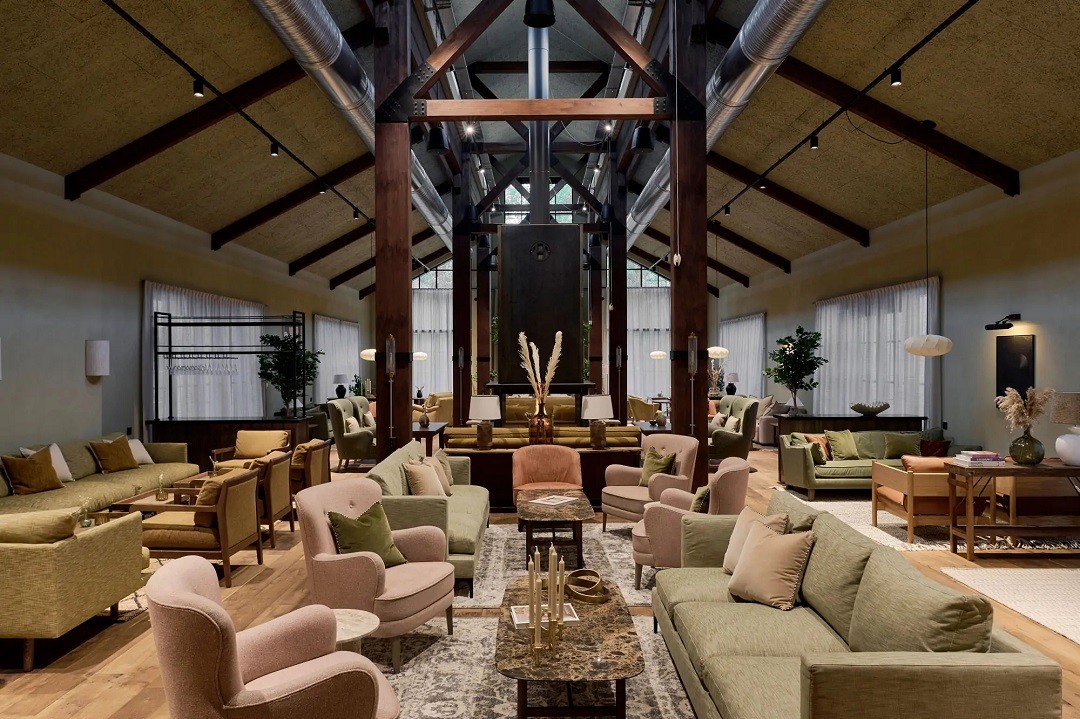
Indoor Public Areas, Guest Rooms, and Outdoor Zones Have Three Different Duty Cycles
The same property contains three fundamentally different seating environments, and specifying one grade across all three either overspends or underperforms.
Lobby and Public-Area Seating
This zone is loaded continuously and cleaned daily. A lobby seat may face years of near-constant occupancy, and the specification needs to reflect that cycle count rather than a residential usage assumption. This is the zone where frame cycle testing, high-density foam, and high-abrasion covers matter most, and where a generic contract furniture supplier often looks adequate on paper but diverges in year three or four.
Guest-Room Seating
Guest-room seating is loaded intermittently, but still far more intensively than residential furniture. A guest-room chair may be used by multiple occupants per day across a ten-year lifespan, accumulating thousands of occupancy cycles that a domestic chair was never engineered to meet. The specification should match the moderate-but-repeated duty cycle rather than importing a lobby-level over-specification that inflates cost without improving performance.
Outdoor and Poolside Seating
Outdoor and poolside seating is loaded moderately but exposed continuously to sun, salt, water, and cleaning chemicals. UV-stable materials, anti-rust frames, water-resistant covers, and fire-rated foam are not optional extras in this zone; they are the baseline. Stability testing also becomes more important where surfaces are uneven and furniture is moved for events and seasonal reconfiguration.
A hotel seating solution built for a lobby is not automatically the right solution for a guest room or a pool deck. Writing the duty cycle into the specification, then matching the test to it, is how procurement avoids both overspending and underperformance.
What This Means for Luxury Properties Choosing a Hotel Seating Manufacturer
For five-star hotels and luxury resorts, the procurement conversation increasingly includes fire-retardant documentation, foam density verification, and abrasion reports tied to the specific cover selected. Missing compliance documentation can lead to container returns, project delays, or re-specification costs that dwarf the unit-price difference between a tested product and an untested one.
This is where the distinction between a general furniture supplier and a specialist hotel seating manufacturer becomes operational rather than semantic. Karam Spaces designs seating systems for continuous commercial duty: public-area seating for lobbies, Majlis, banquet halls, and poolside, with fire-resistant, water-resistant, and easy-clean covers specified for the operator’s cleaning regime as well as the guest’s comfort. Seat depth follows a simple hospitality rule — guests sit deeper than hosts — because in a luxury hospitality space the guest should be the more comfortable person in the room.
If you are evaluating contract grade hotel furniture for an upcoming project, the productive starting point is not another adjective. It is a test matrix: which frame cycle standard, which seat load rating, which foam compression result, which abrasion result on the specified cover, and which stability condition for the intended zone. Karam Spaces can work with your project team to translate those requirements into a hotel seating solution matched to each area’s duty cycle, with the documentation to verify it.
Frequently Asked Questions
Is contract grade a legal standard?
In most markets, no. It is a trade term with no single definition, which is why it should always be followed by the specific tests and standards being claimed.
Why does hotel seating fail at the joint rather than the surface?
Because continuous commercial loading stresses the connection between members far more than it stresses the visible surface. The cover usually still looks acceptable when the joint gives way.
Should one grade cover the whole property?
No. Lobby, guest room, and poolside have fundamentally different duty cycles — continuous loading, intermittent loading, and continuous exposure. Each area should be specified against its own conditions.
Can a residential-grade chair be used in a hotel if it looks right?
Appearance is not a duty-cycle test. A residential frame may survive initial loading and still fail the joint within the first heavy season under commercial loading.
What documents should a hotel seating manufacturer provide?
Depending on the market, request frame cycle test reports, foam density and compression-set results, abrasion results for the specified cover, stability test evidence, and fire-retardancy certificates for the components relevant to the destination market.
“Contract grade” is a claim until someone names the test. If you would like to move your next hotel seating specification from adjectives to verifiable results, contact the Karam Spaces technical and project team with your area-by-area requirements. Share your lobby, guest-room, banquet, and outdoor seating schedules, and we will respond with a test-matched hotel seating solution, material documentation, and a project-specific proposal — so the term either earns itself on paper before delivery, or quietly disappears from the conversation.